
 Español
Clients & projects
Public and private organizations where Ironhand has delivered projects and solutions.
- SEDECO — Secretaría de Desarrollo Económico
- Alcaldías CDMX
- Veracruz — Gobierno del Estado
- OXXO
- Liverpool
We are loading this page’s information and tools.
Explore 16 business scenarios clearly identified as illustrative; real customer work appears separately only when authorization and evidence exist.
We clearly separate Ironhand projects, institutional relationships and team professional experience. We do not attribute quotes or outcomes without evidence.
Public and private organizations where Ironhand has delivered projects and solutions.
Government, multilateral and business organizations Ironhand collaborates with.
Global companies where members of the Ironhand team have built experience and delivered impact; these are not presented as Ironhand clients.

Names, quotes and metrics appear only with authorization and a recorded source. We never turn an estimate or example into an attributed outcome.
First-party delivery record for this website—not a customer project or testimonial.
Delivered September–October 2026 · continuously verifiedTurn a broad technology portfolio into a bilingual buying journey that helps a visitor identify one operating problem, evaluate a bounded package and preserve that context through enquiry.
A Next.js 16 public platform with a governed catalog, one-workflow Blueprint, package-specific enquiry contracts, approved pricing boundaries, evidence labels and responsive English/Mexican-Spanish experiences.
The delivered system connects discovery, product evaluation, phase-one scope, planning investment, evidence and contact without representing modeled material as customer proof. The same release includes rollback, health, security-header and automated regression controls.
These measurements demonstrate delivery quality for this website. They are not a claim about customer revenue, conversion or operational outcomes. Mobile field Core Web Vitals, physical-device assistive-technology review and live provider delivery remain separate verification work.
These companies, timelines and outcomes are realistic examples created to show the expected level of detail. They are not customers, completed engagements or Ironhand performance evidence.
Percentage reductions compare a measured baseline with a target time or rate: (baseline − target) ÷ baseline. Reclaimed hours multiply modeled minutes removed by weekly volume; repeat purchase requires comparable cohorts. None of these assumptions has been validated against customer data.
These scenarios show how Ironhand would address realistic operating conditions. Percentages are modeled post-implementation targets under the stated assumptions—not attributed customer results, guarantees or testimonials.
Select an industry to reconstruct the problem, architecture and potential impact.
Illustrative eight-location restaurant group · 120 employees
First locations live in 3 weeks · complete phase one in 5 weeks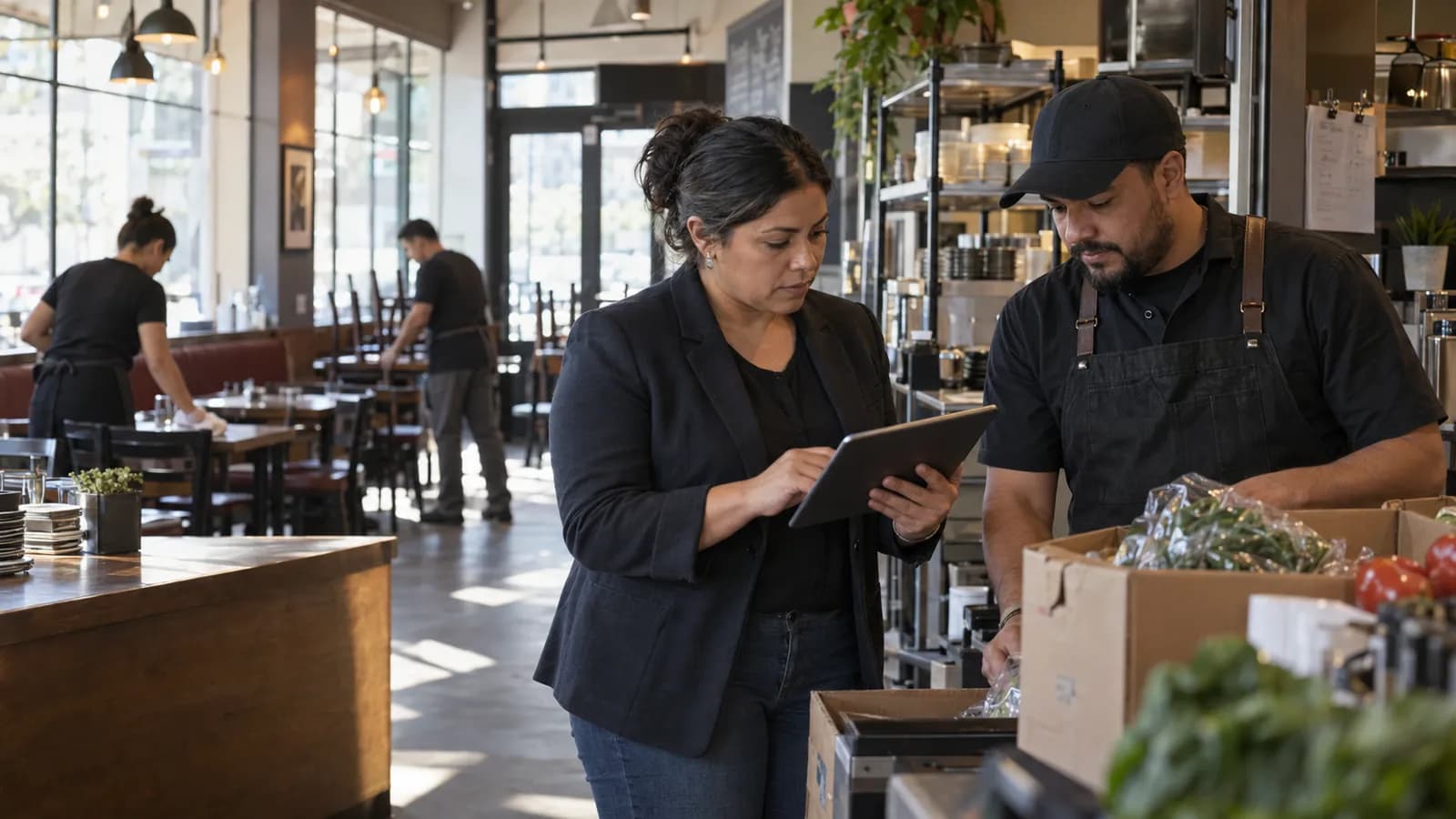
Eight locations, 120 employees and one regional operations lead. This realistic planning story combines common restaurant workflows; it does not portray an Ironhand customer.
Each location opens from the same checklist. A missed delivery is assigned before service begins.
Sales, stock and guest-feedback exceptions reach one regional view instead of separate chats.
The closing lead confirms variances, owners and next actions; leadership sees only unresolved items.
Orders, inventory adjustments, customer conversations and manager reports lived in separate systems. Leadership received consolidated performance several days late and each location followed up differently.
Ironhand connects sales, inventory, customer history, automated WhatsApp follow-up and executive dashboards around one daily operating rhythm.
Directional hypotheses to validate—not achieved results.
60–75%faster daily reporting
30–45%faster customer response
15–25%fewer stock discrepancies
Assumptions used to interpret these ranges:
It creates central visibility without forcing every location into an identical operating role. Permissions, exceptions and follow-up remain locally accountable.
Forecasting, loyalty segmentation and supplier exception workflows.
Compare the approach, see the product or prepare an internal evaluation.
Percentage reductions compare a measured baseline with a target time or rate: (baseline − target) ÷ baseline. Reclaimed hours multiply modeled minutes removed by weekly volume; repeat purchase requires comparable cohorts. None of these assumptions has been validated against customer data.
Percentage reductions compare a measured baseline with a target time or rate: (baseline − target) ÷ baseline. Reclaimed hours multiply modeled minutes removed by weekly volume; repeat purchase requires comparable cohorts. None of these assumptions has been validated against customer data.